
Real-Time Content Marketing in Singapore: The Complete 2026 Playbook
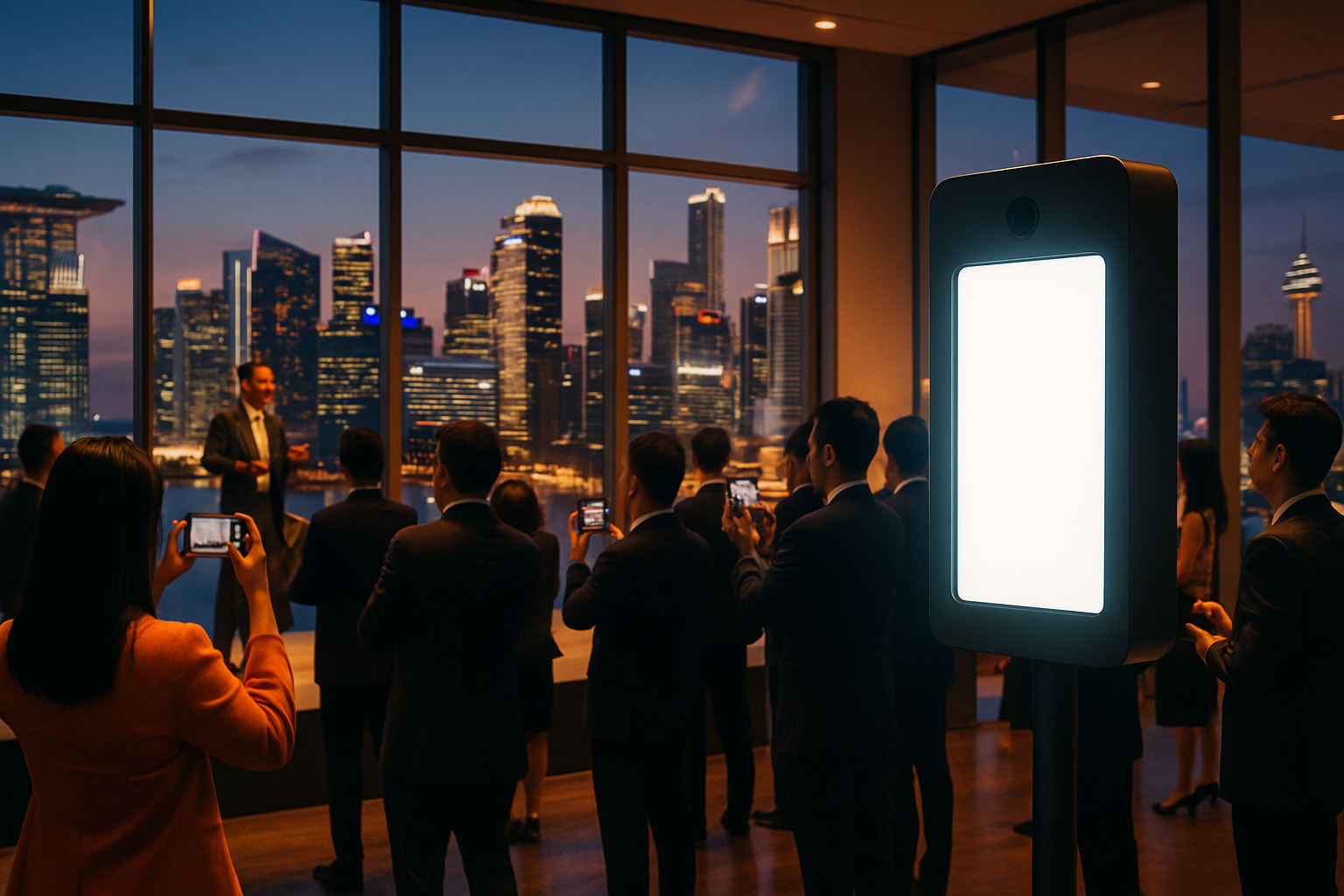
Real-time content marketing is the practice of creating, tailoring and distributing branded media within minutes — often seconds — of a live moment, so it reaches audiences while their attention and emotion peak. In Singapore’s fast-moving events and social landscape, it turns attendees into instant advocates and can dramatically lift organic reach, engagement and ROI.
Speed is now the deciding factor in whether content earns attention or gets ignored. This pillar guide unpacks what real-time content marketing means for Singapore and APAC brands in 2026, the technology stack behind it, how to build a workflow that actually ships in minutes, and how to measure whether it works.
What Is Real-Time Content Marketing?
Real-time content marketing is the discipline of producing and publishing relevant content the instant a moment happens — a product launch, a keynote line, a viral trend or a guest’s arrival at a gala dinner — rather than days later through a slow production pipeline.
Unlike scheduled or evergreen content, real-time content is defined by three characteristics:
- Immediacy — it is captured, refined and shared while the moment is still live and emotionally charged.
- Relevance — it responds to something the audience is already watching, feeling or talking about.
- Distribution-readiness — it is formatted, branded and optimised for the platform (Instagram, TikTok, LinkedIn, WhatsApp, Telegram) before enthusiasm fades.
There are two broad flavours. Reactive real-time content responds to unplanned cultural moments — think a brand jumping on a trending topic within the hour. Planned real-time content is engineered around a known live event, where the systems, brand assets and staff are prepared in advance to publish the second things happen. For most Singapore brands running conferences, roadshows, activations and D&D (dinner and dance) galas, the planned variety delivers the most reliable returns.
Why Does Real-Time Content Win Attention in 2026?
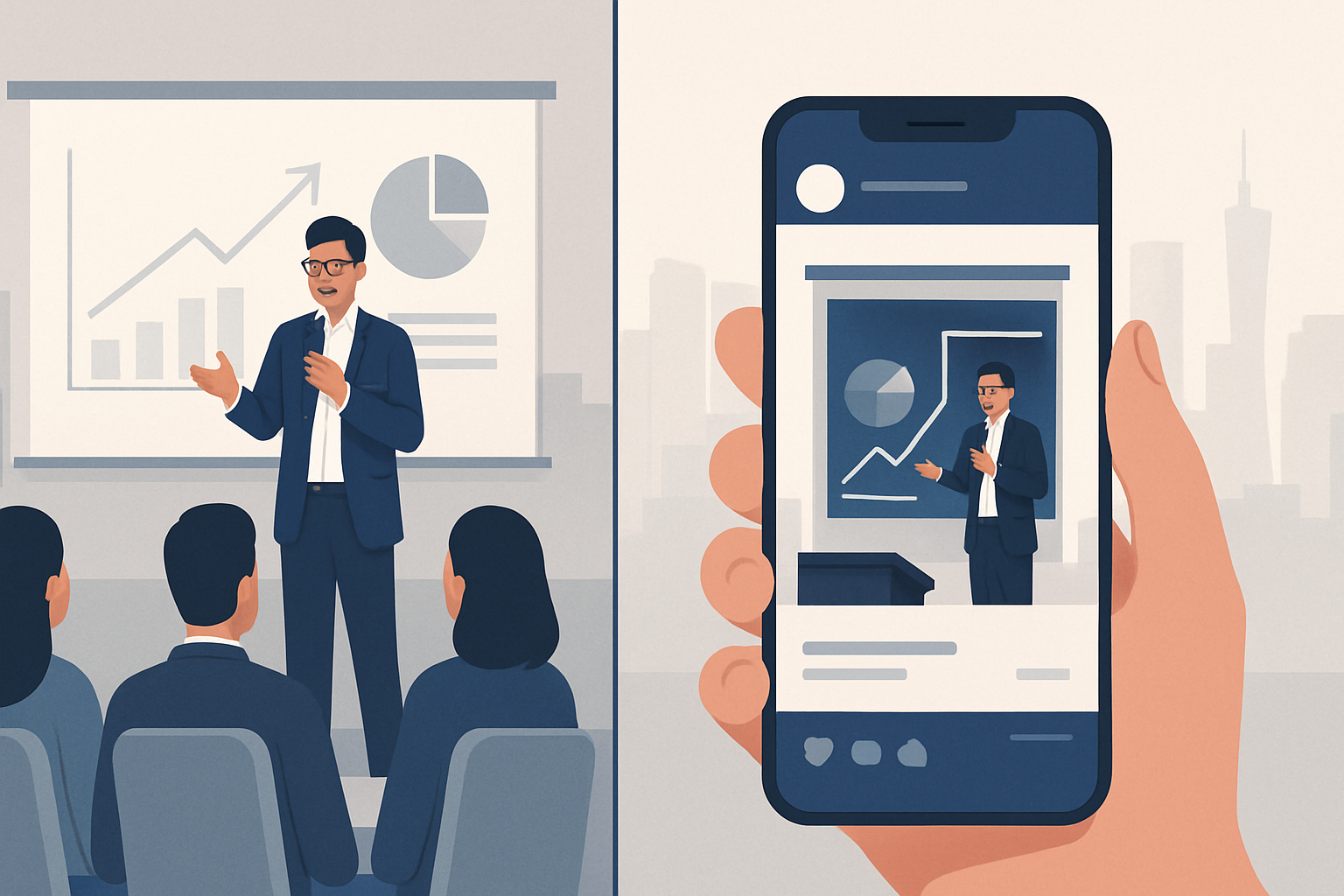
Real-time content wins because human attention and the emotion driving sharing behaviour are both at their peak during the live moment — and social algorithms increasingly reward recency and rapid engagement velocity.
The psychology is straightforward. When someone attends a corporate gala at Marina Bay Sands, a summit at Suntec Singapore Convention & Exhibition Centre, or a brand activation along Orchard Road, their excitement crests during the experience itself. The urge to post — to build their own digital identity and look good to peers — is strongest in that window. If a brand can hand a guest a stunning, ready-to-share asset in that exact moment, the guest tends to publish it almost reflexively.
Three forces make this decisive in 2026:
- Algorithmic recency bias. Platforms surface content that generates rapid early engagement; posting hours after a moment forfeits the initial velocity that fuels reach. Platform documentation such as TikTok for Business consistently emphasises timely, native content as a driver of distribution.
- User-generated content trust. Audiences trust peer content far more than corporate advertising, so content shared by attendees carries an authenticity that paid media rarely matches.
- Attention scarcity. With feeds saturated, the moment passes fast. A polished photo delivered five minutes later can still ride the wave; one delivered the next day arrives after the audience has moved on.
The strategic implication is clear: for live-moment marketing, latency is the enemy. Every minute between capture and publish tends to erode reach, emotional resonance and shareability. A dedicated social media marketing agency in Singapore can help you turn these fleeting moments into a repeatable content engine.
How Does Real-Time Content Marketing Work at Live Events?
At live events, real-time content marketing works by compressing the traditional capture-edit-approve-publish cycle from days into minutes using cloud automation, so branded assets reach attendees and social feeds while the event is still running.
The old workflow was the bottleneck. Photographers shot all day, transferred heavy files overnight, culled and edited manually, then uploaded to a gallery — often 3 to 7 days later. By then the emotional momentum was gone and the content was, for marketing purposes, dead on arrival.
The modern real-time workflow looks like this:
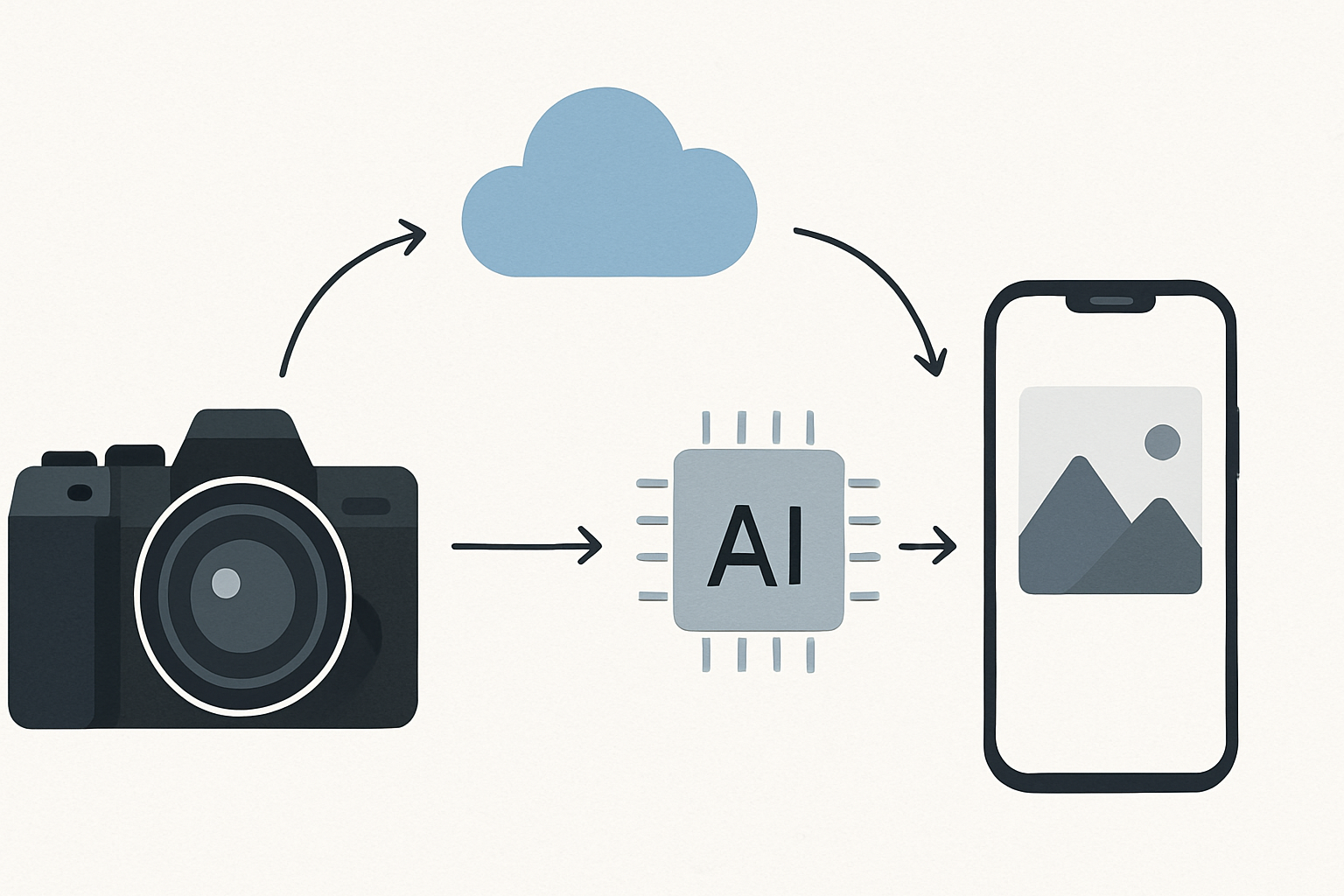
- Capture — professional cameras or kiosks shoot the moment.
- Instant sync — images upload directly from camera to a secure cloud server over the venue’s connectivity.
- AI processing — automated selection, colour correction, retouching and brand overlay are applied in seconds.
- Personalised retrieval — guests find their photos via facial-recognition selfie search or a QR code, without scrolling endless folders.
- Frictionless share — one tap sends a branded, watermarked asset to Instagram, TikTok, LinkedIn, WhatsApp or Telegram.
The entire cycle can complete in five to ten minutes — fast enough to keep pace with a live audience. For a closer look at how this plays out on the ground, see our guide to instant event photography and PR assets.
What Technology Powers Real-Time Content Marketing?
The engine behind real-time content marketing is a stack of cloud infrastructure, artificial intelligence and contactless retrieval tools that remove every point of friction between a moment and its audience.
The core components are:
- Cloud sync from device — cameras and kiosks push files to the cloud instantly, eliminating manual transfers.
- AI post-production — machine learning handles culling, colour grading, lighting correction and retouching at scale.
- Facial-recognition search — attendees snap a selfie and instantly receive a personalised gallery of every photo they appear in.
- QR and NFC retrieval — contactless options for guests who prefer not to use facial recognition.
- Automated brand integration — logos, campaign hashtags, frames and colour palettes are baked into every asset automatically.
- Analytics dashboards — real-time tracking of downloads, shares and reach so organisers can measure impact live.
APAC event teams are prioritising exactly these contactless, AI-driven experiences because guests now expect technology to serve them effortlessly. Facial recognition and instant delivery have shifted from novelty to baseline expectation at premium Singapore events.
Old Workflow vs Real-Time Workflow
| Dimension | Traditional Event Photography | Real-Time Content (AI Cloud) |
|---|---|---|
| Time to delivery | 3–7 days | 5–10 minutes |
| Editing | Manual, per-image | AI automated at scale |
| Guest retrieval | Scroll through folders | Selfie / QR instant search |
| Branding | Added later, if at all | Auto-applied at capture |
| Sharing behaviour | Momentum lost | Shared while emotion peaks |
| Measurement | Little to none | Live share & reach analytics |
| Marketing value | Archival | Active reach amplification |
What Are the Benefits of Real-Time Content Marketing?
The primary benefit of real-time content marketing is amplified organic reach — every attendee becomes a micro-influencer distributing branded content to their own trusted network at zero incremental media cost.
Concrete benefits for Singapore and APAC brands include:
- Higher engagement rates — content posted at peak emotion tends to outperform delayed posts on most platform metrics.
- Authentic advocacy — peer-shared content bypasses ad fatigue and lands as a genuine endorsement.
- Extended reach — a single event can generate hundreds of attendee posts, each reaching a fresh audience.
- Data capture — retrieval systems collect opt-in contact and behavioural data for follow-up nurturing.
- Brand consistency — automated overlays help ensure every shared asset carries your identity, so virality more reliably traces back to you.
- Stronger ROI — organic amplification can reduce reliance on paid media while lifting overall campaign performance.
The strategic insight is that real-time content converts a cost centre (event photography) into a distribution channel (an army of organic advocates). To sustain that momentum beyond the event itself, many brands amplify standout assets through Facebook ads services in Singapore to extend reach to lookalike audiences.
How Do You Build a Real-Time Content Strategy in Singapore?
Building a real-time content strategy in Singapore starts with defining the live moments worth amplifying, then engineering the people, technology and approvals so publishing takes minutes, not days.
Follow this framework:
- Map your moments. Identify the peak emotional beats of your event — arrivals, keynote reveals, awards, group photos, product demos — and decide which deserve real-time amplification.
- Pre-load your brand assets. Prepare logos, frames, hashtags and captions in advance so nothing is designed on the day.
- Pre-approve, don’t post-approve. Agree publishing guidelines and boundaries beforehand so nothing waits in an approval queue during the event.
- Deploy the right tech. Choose an AI cloud photography and retrieval platform matched to your guest count and venue connectivity.
- Assign a live desk. Have a small on-site team monitoring shares, reposting standout attendee content and engaging in comments.
- Plan for connectivity. Singapore venues are among the best-connected in the region, but always confirm bandwidth or provide dedicated failover, since real-time content dies without upload speed.
- Measure live and after. Track downloads, shares and reach during the event, then compile a post-event report for future benchmarking.
Common Pitfalls to Avoid
- Treating photos as archives to be delivered later rather than as a live channel.
- Over-editing to the point that "instant" becomes "an hour later".
- Adding so many form fields to retrieval that guests abandon before sharing.
- Forgetting PDPA-compliant consent for facial recognition and data capture — a legal requirement under Singapore’s Personal Data Protection Act, administered by the PDPC.
How Does Real-Time Content Marketing Deliver ROI?
Real-time content marketing delivers ROI by multiplying earned media — the combined organic reach of attendee shares typically dwarfs the cost of the capture technology, while also generating first-party data for future campaigns.
To quantify returns, track these metrics:
- Share rate — the percentage of attendees who publish at least one asset.
- Estimated reach — shares multiplied by average follower counts across networks.
- Engagement — likes, comments and saves on branded assets.
- Data captured — opt-in leads collected through retrieval.
- Earned media value — reach benchmarked against equivalent paid-media cost.
For a Singapore gala of 500 guests, even a 40% share rate produces 200 branded posts. If each reaches an average of 500 connections, that is 100,000 organic impressions from a single evening — reach that would carry a meaningful cost if bought as paid media on Meta or LinkedIn. For B2B organisers, pairing this earned reach with a considered LinkedIn ads strategy for B2B in Singapore can extend those moments into high-value professional networks.
Frequently Asked Questions
What is real-time content marketing?
Real-time content marketing is the creation and distribution of branded content within minutes of a live moment, so it reaches audiences while their attention and emotion are at their peak rather than after enthusiasm has faded.
How fast should real-time content be published?
Real-time content is ideally published within five to ten minutes of the moment for live events, and within the hour for reactive cultural trends, because beyond that window both algorithmic recency advantages and audience emotion decline sharply.
Is real-time content marketing suitable for B2B events in Singapore?
Yes, real-time content marketing suits B2B events in Singapore very well, because conferences, summits and networking galas — including MICE events at Suntec, Marina Bay Sands and Sands Expo — benefit strongly when professional attendees actively share polished, branded content on LinkedIn and extend reach into high-value business networks.
How does AI cloud photography support real-time content?
AI cloud photography supports real-time content by automating the slowest parts of the process — file transfer, culling, editing and branding — so professionally finished photos are ready to share within minutes, turning event photography into a live marketing channel.
Does facial recognition at events comply with Singapore’s PDPA?
Facial-recognition retrieval can comply with the Personal Data Protection Act (PDPA) when guests give clear, informed consent, data is used only for the stated purpose, and it is stored and deleted responsibly, so you should always confirm your provider follows PDPA-aligned practices and, where relevant, appoints a Data Protection Officer (DPO).
What content platforms matter most for real-time sharing in Singapore?
Instagram and TikTok drive the widest consumer reach for real-time sharing in Singapore, while LinkedIn is essential for corporate and B2B events, and WhatsApp and Telegram are especially valuable across the Singapore and wider APAC market for private, high-trust peer sharing.
How do you measure the success of real-time content marketing?
You measure the success of real-time content marketing by tracking share rate, estimated organic reach, engagement on branded assets, first-party data captured and earned media value benchmarked against equivalent paid-media spend.
What is the biggest mistake brands make with real-time content?
The biggest mistake brands make is treating event content as an archive delivered days later, which forfeits the emotional momentum, algorithmic advantage and shareability that make real-time content valuable in the first place.
How much does real-time content marketing cost for an event in Singapore?
The cost of real-time content marketing for a Singapore event depends on guest numbers, event duration and the technology deployed (AI cloud photography, facial-recognition retrieval, branded overlays and a live desk), and most Singapore providers quote per-event packages where the earned-media reach generated typically offsets the investment when benchmarked against equivalent paid-media spend, so it is best to request a tailored quote based on your headcount and venue.
Real-time content marketing rewards brands that remove friction between the moment and the audience. At Halo Tech Media, we combine AI cloud photography, contactless facial-recognition retrieval and automated brand integration to help Singapore and APAC brands turn every live event into a wave of authentic, on-brand advocacy. If you are planning an event in Singapore and want your best moments working for you within minutes rather than days, get in touch with Halo Tech Media to explore how we can amplify your next activation.
 Back
Back