
Email Marketing in Singapore: The Complete 2026 Guide to Services, Software, Costs & Strategy

Email marketing in Singapore is the practice of sending permission-based, PDPA-compliant emails to nurture leads and drive sales — and it remains one of the highest-ROI channels available, returning roughly S$40 for every S$1 spent. Success in the SG market hinges on the right software, clean segmented data, strong automation and consistent value delivery.
This pillar guide covers everything a Singapore brand needs: choosing services and agencies, comparing software, understanding costs, staying compliant with the PDPA and Spam Control Act, building your database, and running campaigns that actually convert in the APAC context.

Is email marketing still effective in Singapore in 2026?
Yes — email marketing remains highly effective in Singapore, consistently outperforming social media and paid ads on return on investment. With Singapore’s internet penetration exceeding 96% and near-universal smartphone adoption, email is a direct, owned channel that no algorithm can throttle or de-platform.
Several factors keep email relevant for SG brands:
- You own the audience. Unlike social followers, your email list is an asset you control outright.
- High mobile readership. Most Singaporeans check email on their phones, so mobile-first design is essential.
- Multilingual reach. Campaigns can be tailored across English, Mandarin, Malay and Tamil audiences.
- Trust and measurability. Every open, click and conversion is trackable, making ROI easy to prove to stakeholders.
The average email ROI globally sits around 36–42x, and Singapore’s affluent, digitally mature consumers respond strongly to personalised, well-timed offers — particularly during peak retail moments such as the Great Singapore Sale (GSS), 11.11, 12.12, Chinese New Year and the year-end holiday season.
What are email marketing services in Singapore?
Email marketing services in Singapore are professional offerings that plan, build, send and optimise email campaigns on a brand’s behalf, ranging from one-off newsletter design to fully managed lifecycle automation. They typically bundle strategy, copywriting, design, technical setup and reporting.
Most providers structure their services around these core deliverables:
- Strategy & audit — reviewing your list health, deliverability and current performance.
- Template & design — responsive, on-brand email templates that render across Gmail, Outlook and Apple Mail.
- Copywriting & localisation — subject lines and body copy tuned for SG audiences.
- Automation & flows — welcome series, abandoned-cart, post-purchase and win-back sequences.
- List management & segmentation — cleaning, tagging and dividing contacts for relevance.
- Deliverability setup — SPF, DKIM and DMARC authentication so emails land in the inbox.
- Reporting — monthly dashboards covering opens, clicks, conversions and revenue attribution.
Bulk email marketing in Singapore — high-volume sends to large lists — is a common sub-service, but it must be paired with proper authentication and consent to avoid spam-folder placement and PDPA breaches.
How do I choose an email marketing agency, company or firm in Singapore?
Choose a Singapore email marketing agency by matching their platform expertise, industry experience and reporting transparency to your business goals — not by price alone. A good agency proves ROI, understands the PDPA and Spam Control Act, and integrates email with your wider marketing stack.
Use this checklist when shortlisting an email marketing company or firm in Singapore:
- Platform certifications — are they certified partners for Klaviyo, Mailchimp, HubSpot or Salesforce?
- Sector proof — do they have case studies in your vertical (e-commerce, B2B SaaS, hospitality, finance)?
- Deliverability know-how — can they explain domain authentication and sender reputation clearly?
- Compliance fluency — do they build consent capture and unsubscribe handling into every flow, in line with PDPC guidelines?
- Reporting cadence — will you receive revenue-linked reporting, not just vanity opens?
- Integration ability — can they connect email to Shopify, WooCommerce, your CRM and analytics?
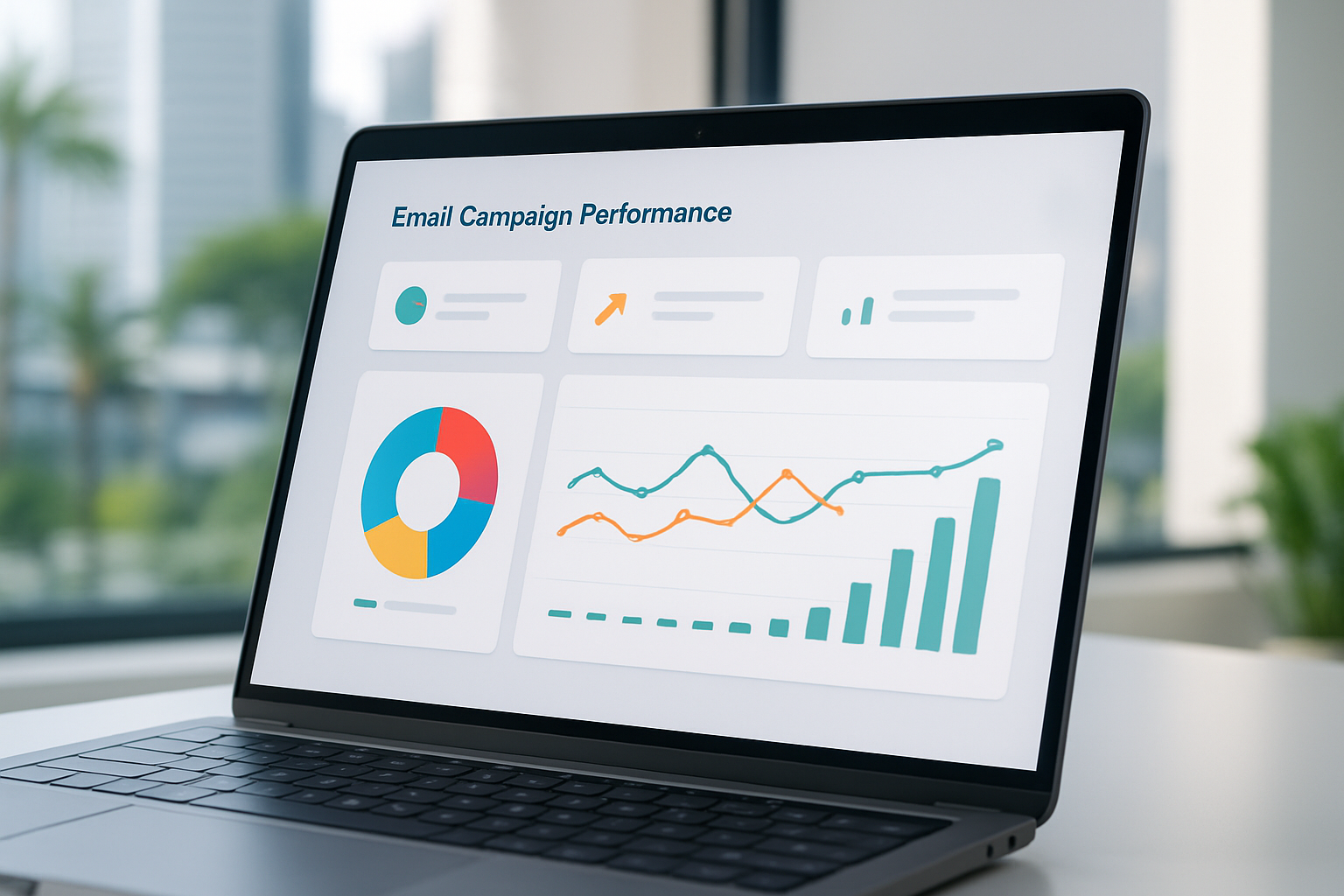
At Halo Tech Media, we combine email with event technology and broader digital marketing, so campaigns work as part of a connected customer journey rather than in isolation.
What is the cost of email marketing in Singapore?
Email marketing costs in Singapore typically range from S$500 to S$5,000+ per month for managed services, depending on send volume, automation complexity and whether design and strategy are included. Software subscriptions add a separate cost tied to your contact count. Note that prices from local vendors may be quoted before or after 9% GST — always confirm.
Here is an indicative breakdown of what SG brands can expect to pay:
| Service tier | Typical monthly cost (SGD) | What’s usually included | Best for |
|---|---|---|---|
| Software only (self-managed) | S$20 – S$400 | Platform licence, templates, basic automation | Small teams, startups |
| Basic managed service | S$500 – S$1,200 | 2–4 campaigns/month, reporting, list hygiene | SMEs new to email |
| Growth package | S$1,500 – S$3,000 | Automation flows, segmentation, A/B testing, design | Scaling e-commerce & B2B |
| Full lifecycle / enterprise | S$3,500 – S$8,000+ | Strategy, advanced flows, CRM integration, dedicated manager | High-volume retailers, enterprises |
| One-off setup / audit | S$800 – S$3,000 (project) | Account setup, template build, deliverability config | Brands launching or fixing email |
Factors that push email marketing cost in Singapore higher include large contact databases, multilingual localisation, advanced automation, custom template coding and integration with e-commerce or CRM platforms. Always confirm whether the software licence is bundled or billed separately, and whether quotes are GST-inclusive. SMEs may also be able to offset costs through grants such as the PSG (Productivity Solutions Grant) for pre-approved digital marketing solutions.
What is the best email marketing software in Singapore?
The best email marketing software in Singapore depends on your business type: Klaviyo leads for e-commerce, HubSpot and Salesforce for B2B and CRM-heavy workflows, and Mailchimp or Brevo for cost-conscious SMEs. All support PDPA-friendly consent and unsubscribe features.
| Platform | Best for | Starting price (approx SGD/mo) | Standout strength |
|---|---|---|---|
| Klaviyo | E-commerce (Shopify) | Free tier, then ~S$60+ | Deep revenue attribution & flows |
| Mailchimp | SMEs & beginners | Free tier, then ~S$20+ | Easy interface, broad integrations |
| HubSpot | B2B & full-funnel | Free tier, then ~S$25+ | CRM + email + automation in one |
| Brevo (Sendinblue) | Budget bulk sending | Free tier, then ~S$12+ | Pay-per-send, SMS included |
| Salesforce Marketing Cloud | Enterprise | Custom quote | Enterprise-grade personalisation |
| Mailpro | Simple newsletters | ~S$10+ | Straightforward SG-focused sending |
When choosing email marketing software or solutions in Singapore, weigh up:
- Contact-based vs send-based pricing — high-frequency senders often prefer pay-per-send models.
- Automation depth — visual flow builders save enormous time.
- Integrations — native Shopify, WooCommerce and CRM connectors matter.
- Deliverability tools — built-in authentication and inbox-placement testing.
- Local support & data residency — relevant for PDPA-regulated industries such as finance and healthcare.
How does the PDPA affect email marketing in Singapore?
The Personal Data Protection Act (PDPA) requires that you obtain consent before collecting and using personal data for email marketing, honour withdrawal of consent, and only use data for the purposes notified. Singapore’s Spam Control Act adds specific rules for unsolicited commercial messages.
To stay compliant, every SG email programme should:
- Obtain clear consent — use opt-in checkboxes and record when and how consent was given.
- Provide an unsubscribe option — every commercial email must include a working opt-out that is honoured within 10 business days under the Spam Control Act.
- Include sender identification — state who is sending and provide a valid Singapore contact address.
- Add an "ADV" label where required — unsolicited commercial messages must be labelled per the Spam Control Act.
- Protect the database — store contact data securely and appoint a Data Protection Officer (DPO) as the PDPA requires.
The PDPA is enforced by the Personal Data Protection Commission (PDPC), and breaches can attract significant financial penalties — up to S$1 million, or up to 10% of annual turnover in Singapore for organisations with local turnover exceeding S$10 million, for serious cases. Compliant, consent-based lists also perform better because recipients genuinely want to hear from you.

How do I build an email marketing database in Singapore?
Build your email marketing database in Singapore by capturing consent-based first-party data through valuable opt-ins — never by buying lists, which breaches the PDPA and destroys deliverability. Quality and consent always beat raw quantity.
Proven, compliant list-building tactics for SG brands include:
- Lead magnets — guides, discount codes, checklists or webinar access in exchange for an email.
- Website pop-ups & forms — timed or exit-intent forms with a clear value proposition.
- Checkout opt-ins — a consent checkbox during e-commerce purchase.
- Events & webinars — capture registrations, a natural fit with Halo Tech’s event-technology work.
- Loyalty programmes — reward sign-ups with points or perks.
- Gated content — premium reports behind a sign-up form.
Avoid purchased or scraped "email marketing database Singapore" lists. They violate consent requirements, damage sender reputation, generate spam complaints, and rarely convert. A smaller engaged list will always outperform a large cold one.
What should a Singapore email marketing strategy include?
An effective Singapore email marketing strategy combines segmentation, automation, personalisation and consistent testing, aligned to the local calendar and buyer journey. It treats email as a relationship channel, not just a broadcast tool.
Core components of a high-performing SG strategy:
- Segmentation — split lists by behaviour, purchase history, location and language.
- Automation flows — welcome, abandoned-cart, browse-abandonment, post-purchase and win-back sequences run 24/7.
- Personalisation — dynamic content, product recommendations and first-name usage lift engagement.
- Mobile-first design — most SG opens happen on mobile, so single-column, thumb-friendly layouts win.
- Send-time optimisation — test morning commute (MRT) and lunchtime windows for SG audiences (SGT / GMT+8).
- A/B testing — subject lines, CTAs, send times and layouts, iterated monthly.
- Local calendar alignment — plan around CNY, Hari Raya Puasa, Deepavali, National Day (9 Aug), GSS, 11.11 and 12.12.
- Deliverability maintenance — regular list cleaning, re-engagement and authentication checks.
Benchmark healthy performance: aim for open rates above 20%, click rates of 2–5%, and unsubscribe rates below 0.5%. Track revenue per email, not just opens, to prove commercial value.
Where can I take an email marketing course in Singapore?
You can learn email marketing in Singapore through accredited providers such as Vertical Institute, NTUC LearningHub and General Assembly, as well as platform-specific certifications from Klaviyo, HubSpot and Mailchimp. Many local courses are eligible for SkillsFuture Credit.
Options for building email marketing skills in SG:
- Vertical Institute — short digital marketing courses covering email fundamentals.
- NTUC LearningHub / General Assembly — practical, SkillsFuture-eligible marketing programmes.
- HubSpot Academy — free, globally recognised email marketing certification.
- Klaviyo & Mailchimp certifications — platform-specific, free and highly practical for hands-on roles.
- In-house agency training — some agencies, including Halo Tech Media, offer tailored team workshops.
Demand for these skills is strong — LinkedIn and JobStreet consistently list hundreds of email marketing roles across Singapore, with salaries reflecting the value of measurable, revenue-driving channels.
FAQ
How much does email marketing cost per month in Singapore?
Managed email marketing services in Singapore typically cost between S$500 and S$5,000 per month, depending on send volume, automation complexity and whether design and strategy are included. Software subscriptions are usually billed separately, ranging from free tiers to several hundred dollars monthly based on your contact count. Remember to factor in 9% GST and check whether you qualify for the PSG grant.
Is buying an email list legal in Singapore?
Buying or using a purchased email list is effectively non-compliant under the PDPA because you cannot demonstrate valid consent from those individuals. It also harms your sender reputation and deliverability. Always build your list through consent-based, first-party opt-ins instead.
What is the best email marketing platform for Singapore e-commerce?
Klaviyo is widely regarded as the best platform for Singapore e-commerce because of its deep Shopify integration, powerful automation flows and precise revenue attribution. Brands prioritising lower cost or all-in-one CRM may prefer Mailchimp or HubSpot respectively.
Do I need to include an unsubscribe link in every email?
Yes — under Singapore’s Spam Control Act, every commercial email must contain a clear and functional unsubscribe option, and opt-out requests must be honoured within 10 business days. Failing to do so can result in enforcement action and penalties.
How often should I send marketing emails in Singapore?
Most Singapore brands find that one to four emails per week works well, balancing engagement with fatigue. The right cadence depends on your audience and content value — monitor unsubscribe and complaint rates, and reduce frequency if they rise above healthy benchmarks.
What open rate is considered good in Singapore?
A healthy open rate in Singapore generally falls above 20%, with click-through rates of 2–5% and unsubscribe rates below 0.5%. Performance varies by industry, so benchmark against your own historical results and focus on revenue per email over time.
Should I hire an agency or manage email marketing in-house?
Hire an agency if you lack the time, technical expertise or resources to build automation, maintain deliverability and produce consistent creative. Manage in-house if you have a dedicated marketer and simpler needs. Many SG brands use a hybrid model — an agency sets up systems that the internal team then runs.
What makes email marketing effective for Singapore audiences?
Effective email marketing in Singapore is mobile-first, consent-based, well-segmented and aligned to the local retail calendar. Personalisation, relevant timing and multilingual sensitivity to English, Mandarin, Malay and Tamil audiences all improve engagement and conversion.
Does the PDPA apply to B2B email marketing in Singapore?
The PDPA applies to personal data, including named individuals’ work email addresses (e.g. john.tan@company.sg). Generic role-based addresses (e.g. sales@company.sg) fall outside the definition of personal data, but the Spam Control Act’s unsubscribe and labelling rules still apply. When in doubt, obtain consent and offer opt-out.
Ready to turn email into your highest-ROI channel? Contact Halo Tech Media for a PDPA-compliant email marketing strategy tailored to your Singapore audience — from software setup and automation to creative and reporting that proves real revenue.
2148
Further reading: Marketing Automation in Singapore: The Definitive 2025 Guide to Tools, Platforms & Workflows
 Back
Back