
Google Ad Grants for Nonprofits in Singapore: The Complete 2026 Guide to Winning Donors

Google Ad Grants gives eligible nonprofits up to US$10,000 (about S$13,500) in free Google Search advertising every month. In Singapore, registered charities and IPCs that meet Google’s eligibility rules can use this grant to attract high-intent donors, recruit volunteers and grow awareness — provided they run compliant, conversion-focused campaigns rather than chasing empty clicks.
For Singapore charities operating on tight budgets, this is one of the most under-used growth levers available. Yet many organisations activate the grant, generate thousands of impressions, and never see a single donation. This guide fixes that. We cover eligibility, the application process, the keyword and landing-page strategy that actually converts donors, measurement, and the compliance rules that keep your account alive — all with concrete Singapore and APAC context.

What Is Google Ad Grants and How Does It Work?
Google Ad Grants is a philanthropic programme that gives qualifying nonprofits free access to Google Search advertising through a dedicated, restricted version of Google Ads. Instead of paying per click, eligible charities receive a monthly in-kind advertising allocation to promote their mission on Google’s search results pages.
The grant is delivered as US$10,000 per month — roughly S$329 per day — and it never rolls over; any unspent budget simply disappears at month’s end. Crucially, Ad Grants is not the same as a normal paid Google Ads account. It comes with a distinct set of restrictions:
- Search ads only — no display, video, Shopping or Gmail placements.
- A US$2.00 maximum cost-per-click bid on standard bidding (though "Maximise conversions" smart bidding can exceed this).
- Keyword and quality rules — a minimum 5% account click-through rate (CTR), a Quality Score of 3 or above on keywords, and a ban on most single-word and overly generic keywords.
- Campaign structure minimums — at least two active ad groups per campaign, two ads per ad group, and two sitelink extensions.
In practice, this means Ad Grants rewards disciplined, tightly-themed campaigns and punishes lazy, broad ones. Singapore nonprofits that treat it as "free money for any traffic" quickly hit performance floors and risk suspension.
Is My Singapore Nonprofit Eligible for Google Ad Grants?
To qualify, your organisation must be a registered charity that first joins Google for Nonprofits and then passes the Ad Grants eligibility review — and in Singapore that means being validated through Google’s local partner, TechSoup Asia-Pacific.
Singapore charities validate their nonprofit status through TechSoup, Google’s global validation partner, which confirms your legal charitable standing before Google grants access. Here is what most Singapore organisations need to demonstrate:
- Registered charitable status with the Commissioner of Charities under the Charities Act, and ideally Institution of a Public Character (IPC) status if you issue tax-deductible receipts.
- A functioning, secure website on your own domain, with substantial content and a clear description of your mission (HTTPS is required).
- Agreement to Google’s required certifications regarding nondiscrimination and appropriate use of donations.
Organisations that are not eligible include government entities, hospitals and healthcare organisations (a separate Google programme may apply), and most schools, childcare and academic institutions — though their philanthropic arms may qualify. If you are unsure whether your Society, Company Limited by Guarantee, or charitable trust qualifies, a quick eligibility audit before applying saves weeks of back-and-forth. A well-built, content-rich site is a prerequisite here, so it is worth reviewing your web design in Singapore before you begin the application.
Citation-ready fact: Google for Nonprofits verifies Singapore-registered charities through TechSoup before granting access to the Ad Grants advertising allocation of up to US$10,000 (about S$13,500) per month.
How Do I Apply for a Google Ad Grant in Singapore?
Applying for Google Ad Grants in Singapore is a three-stage process: validate your nonprofit with TechSoup, enrol in Google for Nonprofits, then activate Google Ad Grants and submit a compliant Google Ads account for review.
Here is the practical sequence Halo Tech Media walks Singapore clients through:
- Get a TechSoup validation token. Register your charity with TechSoup Asia-Pacific and provide your Charity registration details (your Unique Entity Number and Commissioner of Charities registration). This confirms your legitimacy to Google.
- Create a Google for Nonprofits account. Use your token to verify. Approval typically takes a few business days once documents are in order.
- Enrol in Ad Grants and build your account. Set up a Google Ads account that already follows the programme rules — proper campaign structure, conversion tracking, mission-relevant keywords and at least two ads per group. Google reviews this account before switching on the grant.
- Pass the review and go live. Once approved, your monthly allocation activates. From here, ongoing compliance is what keeps it running.

A common Singapore pitfall is applying with a thin website or a homepage-only content strategy. Google wants to see that your site genuinely serves your mission, so invest in mission pages, impact stories and a proper donation page before you apply.
What Keywords Attract Donors — Not Just Clicks?
The keywords that attract donors are high-intent, longtail search phrases where the user is actively ready to give, volunteer or take a specific action — not broad research or vanity terms. Aligning keywords with transactional intent is the single biggest determinant of whether your grant raises money.
Search intent broadly falls into three buckets, and only one of them reliably converts to donations:
- Informational ("homelessness statistics Singapore", "what is dementia") — the user is learning, not giving.
- Navigational ("Willing Hearts donate", "SPCA Singapore") — the user already knows a brand.
- Transactional ("donate to food bank Singapore", "sponsor a rescue dog SG") — the user is ready to act.
Ad Grants explicitly bans most single-word keywords and generic terms like "charity" or "donate" because they are vague and burn allocation without results. The winning approach is longtail keywords that capture donors at the decision moment. Understanding how search engines interpret intent is central to getting this right, and the same principles underpin sustainable SEO services in Singapore. The table below compares approaches:
| Keyword type | Example (SG context) | Intent | Cost pressure | Donor conversion likelihood |
|---|---|---|---|---|
| Single-word (banned) | "donate" | Unclear | Very high | Very low |
| Broad generic | "charity Singapore" | Mixed | High | Low |
| Longtail transactional | "donate to children’s charity Singapore" | Transactional | Moderate | High |
| Local + cause | "volunteer food distribution Singapore" | Action-oriented | Low | Medium–high |
| Tax-relevant | "IPC tax deductible donation Singapore" | Transactional | Moderate | High |
Practical tips for Singapore keyword research:
- Layer in local modifiers — "Singapore", "SG", neighbourhood and estate names (e.g. "Tampines", "Jurong", "Ang Mo Kio"), and "near me" all sharpen intent.
- Target tax-deductibility searches — many Singapore donors search around IPC status and the 250% tax deduction eligibility, especially near the year of assessment cut-off (donations before 31 December count for that tax year). These are exceptionally high-intent.
- Build cause-specific ad groups — separate "elderly care", "animal welfare", "education bursary" so ads and landing pages match tightly, protecting your Quality Score.
- Use negative keywords aggressively — exclude "free", "jobs", "salary" and irrelevant terms to keep your CTR above the 5% floor.
What Makes a Donation Landing Page Convert?
A donation page converts when it communicates tangible impact within seconds, loads fast on mobile, uses an emotionally specific call-to-action, and removes every point of friction and doubt in the giving process. Driving qualified traffic is only half the battle; the landing page does the closing.
The strongest converting elements for Singapore nonprofits:
- Instant clarity of impact. Within three seconds, a visitor should understand exactly what their gift does — "S$30 provides a week of meals for a senior in need" beats a vague mission statement every time.
- Mobile-first, frictionless design. More than half of nonprofit web traffic now comes from mobile, and Singapore’s smartphone penetration is among the highest in the world. Support PayNow, credit card and GIRO and never force pinch-zooming on a donation form.
- Action-oriented CTAs. Replace "Submit" with visceral phrasing: "Feed a Family Today", "Rescue a Dog Now", "Sponsor a Student’s Bursary".
- Trust signals. Display your IPC/Charity registration number and UEN, HTTPS security, and recognisable assurances such as the Charity Transparency Framework or the Charity Portal (charities.gov.sg) listing, plus a clear breakdown of how funds are used. Singapore donors are increasingly governance-conscious after high-profile local charity scandals, so transparency directly lifts conversion.
- Reduced form fields. Every extra field costs donations. Ask only for what you need to process the gift and issue a tax-deduction receipt (including the donor’s NRIC/UEN for IPC tax-deductible receipting to IRAS).
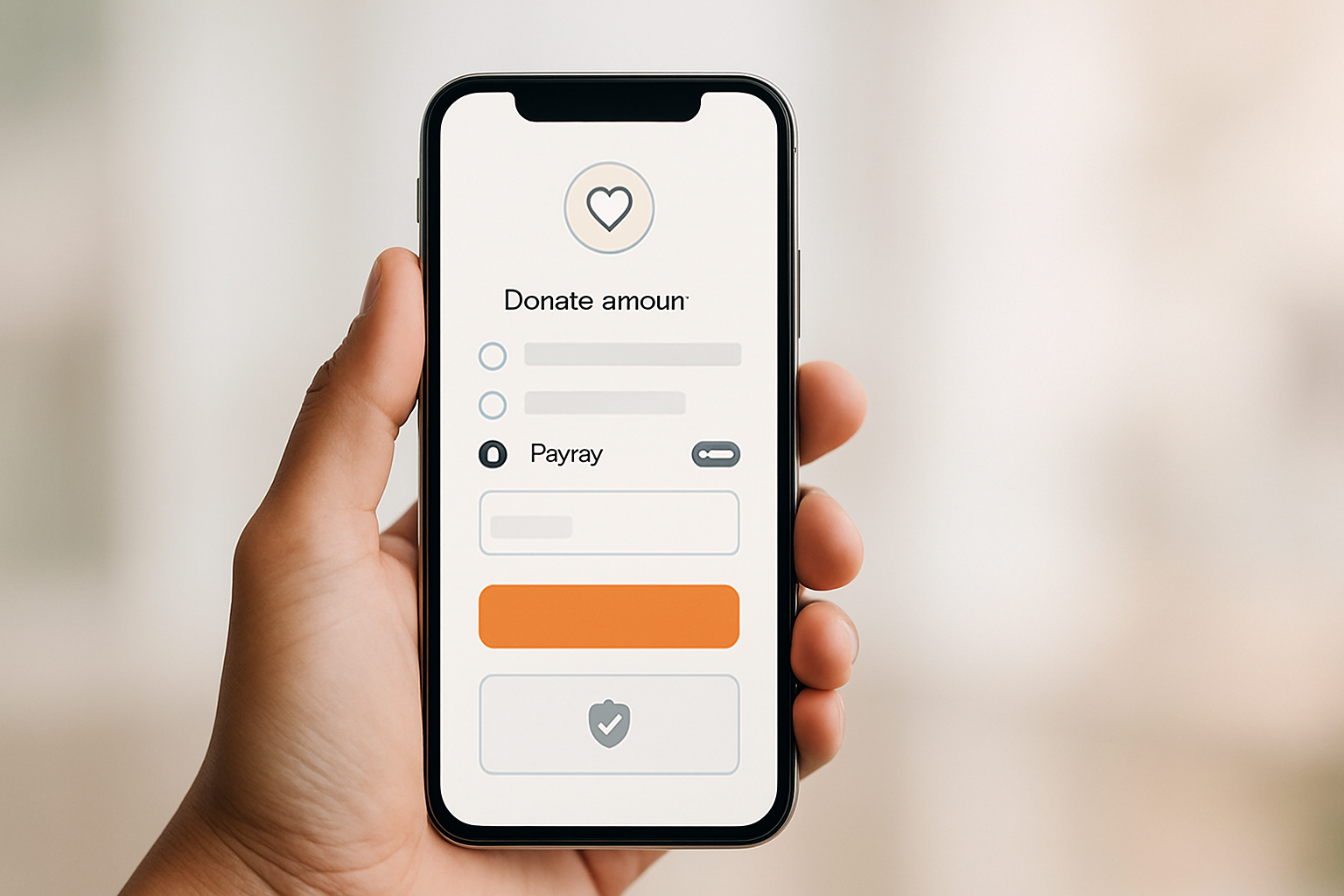
Pair each ad group with a dedicated landing page rather than sending everyone to the homepage. Message match between the search query, the ad copy and the landing page headline is one of the most reliable ways to raise both conversion rate and Quality Score simultaneously.
How Do Nonprofits Track Donation Performance?
Nonprofits track donation performance by connecting Google Ads to Google Analytics 4 (GA4) and their donation platform via Google Tag Manager, then measuring completed transactions, donation value and cost-per-conversion back to the exact keyword. Free clicks still demand rigorous accountability.
Google Ad Grants actually requires meaningful conversion tracking — accounts must record at least one conversion per month, and healthy accounts track donations, volunteer sign-ups or newsletter registrations. Set up the following:
- GA4 + Google Tag Manager integrated with your donation platform (Give.Asia, Giving.sg, GlobalGiving, Stripe or a custom checkout common in Singapore).
- Conversion actions for micro and macro goals — form starts, completed donations, recurring-gift sign-ups and volunteer applications.
- Donation value tracking so you can report actual dollars raised, not just conversion counts.
Understand attribution too. The donor journey is rarely linear: a supporter might click your ad on Monday, read an impact story on Wednesday, and donate via a retargeting email on Friday. Data-driven attribution in GA4 distributes credit more fairly than last-click, helping you defend your grant’s value to your board.
To calculate true ROI, weigh funds raised against your real costs — staff time, agency fees and content production — since the clicks themselves are free but the strategy is not. A useful Singapore benchmark is cost-per-dollar-raised: even at zero media cost, tracking this keeps campaigns honest and fundable at the next board meeting.
How Do I Keep My Google Ad Grant Compliant and Avoid Suspension?
You keep your grant active by maintaining a 5% click-through rate, using structured campaigns with geo-targeting and valid conversion tracking, avoiding banned keywords, and logging into the account regularly. Non-compliant accounts are automatically deactivated and must be reinstated.
The key ongoing rules to protect your allocation:
- Maintain a 5%+ account CTR every month — prune low-performing keywords and tighten ad copy.
- Keep valid conversion tracking with at least one conversion monthly.
- Respect campaign structure — minimum two ad groups per campaign, two ads per group, two sitelinks.
- Avoid banned keywords — no single-word or overly generic terms, and keep Quality Score at 3+.
- Set geo-targeting — most Singapore charities focus on Singapore, though diaspora and regional causes may target wider APAC.
- Log in and make changes at least monthly to avoid dormancy flags.
If suspended, you can usually self-reinstate once you fix the underlying issue, but repeated violations damage your standing. This is where many volunteer-run Singapore charities struggle — the grant needs consistent, informed management, not a set-and-forget approach.
Google Ad Grants vs Paid Google Ads: What’s the Difference?
Google Ad Grants offers free Search-only advertising with strict rules, while paid Google Ads offers full-funnel, unrestricted advertising you pay for — and most mature nonprofits eventually run both.
| Feature | Google Ad Grants | Paid Google Ads |
|---|---|---|
| Cost | Free (up to US$10k/month) | Pay per click |
| Ad formats | Search only | Search, Display, Video, Shopping, Gmail, Demand Gen |
| Bid cap | US$2 (standard) | No cap |
| Keyword rules | Strict; no single-word/generic | Flexible |
| CTR requirement | 5% minimum | None |
| Ad position | Below paid ads | Can win top positions |
| Best for | Sustained awareness, capturing existing demand | Aggressive campaigns, events, matched-giving pushes |
A smart Singapore strategy uses Ad Grants for always-on demand capture and a modest paid budget for time-sensitive campaigns — Giving Week, President’s Challenge periods, SG Cares / Giving.sg drives, or year-end tax-deduction pushes — where top placement and display retargeting matter most. To broaden reach for these moments, many charities complement Search with Facebook ads services in Singapore for retargeting and storytelling.
Frequently Asked Questions
How much is the Google Ad Grant worth in Singapore dollars?
The grant is worth US$10,000 per month, which is approximately S$13,500 depending on the exchange rate. This allocation is granted in-kind as free Google Search advertising and does not roll over — any unused amount is forfeited at the end of each month.
Can a Singapore charity without IPC status still get Google Ad Grants?
Yes, IPC status is not strictly required, but your organisation must be a registered charity (with the Commissioner of Charities) that can be validated through TechSoup as a legitimate nonprofit. That said, IPC status strengthens donor trust and lets you target lucrative tax-deductible donation searches (with the 250% tax deduction), so it is highly beneficial for fundraising campaigns.
How long does it take to get approved for Google Ad Grants in Singapore?
Approval usually takes between a few days and a few weeks. TechSoup validation and Google for Nonprofits enrolment can be completed in days if your documents are in order, while the final Google Ads account review depends on how well your initial campaigns follow the programme’s structure and keyword rules.
Why is my Google Ad Grant account not raising any donations?
The most common reasons are broad low-intent keywords, sending traffic to a generic homepage instead of dedicated donation pages, weak calls-to-action, and missing conversion tracking. Refocusing on high-intent longtail keywords and optimising mobile donation pages (with PayNow) typically transforms results.
What is the 5% CTR rule and why does it matter?
Google requires Ad Grants accounts to maintain a click-through rate of at least 5% each month. Falling below this for two consecutive months can lead to temporary account deactivation, so you must regularly prune underperforming keywords and improve ad relevance to stay compliant.
Can I run Google Ad Grants and paid Google Ads at the same time?
Yes. Many established Singapore nonprofits run both simultaneously, using the free Ad Grants account for always-on Search visibility and a separate paid account for premium placements, display retargeting and time-limited fundraising campaigns (such as year-end tax-deduction drives) that require formats the grant does not allow.
Do I need a professional agency in Singapore to manage Google Ad Grants?
Not strictly, but the programme’s compliance rules, keyword restrictions and conversion-tracking requirements demand consistent, informed management. Volunteer-run charities in particular often benefit from a local Singapore agency’s support to avoid suspension and to convert free clicks into real donations.
What can the grant be spent on besides donations?
Beyond soliciting donations, Singapore nonprofits use Ad Grants to recruit volunteers, promote events and programmes, grow newsletter subscriptions, and raise awareness for advocacy causes. Any of these can be tracked as valid conversions to satisfy the programme’s performance requirements.
Google Ad Grants can be transformational for a Singapore nonprofit — but only when eligibility, compliance, keyword intent, landing-page conversion and measurement all work together. If you would like help applying, reviving a suspended account, or turning free clicks into real donations, the team at Halo Tech Media — a Singapore-based digital agency — would be glad to help. Get in touch for a friendly, no-obligation conversation (kopi optional) about your mission and your goals.
 Back
Back