
Transform Boring Events into Interactive Experiences with Tech
The familiar sight of a dim ballroom filled with disengaged attendees, illuminated only by their smartphone screens, signals the end of the traditional “broadcast” event model. In today’s experience economy, attention is the ultimate currency, and audiences conditioned by digital interactivity now demand participation over passive observation. At Halo Tech Media, we recognize that this shift is critical: transforming a boring event isn’t about adding gimmicks, but about leveraging technology to create a two-way dialogue that drives genuine engagement and measurable ROI
The Death of the Passive Observer
Why are traditional formats failing? The answer lies in psychology and evolving consumer behavior. According to research from Skift Meetings and EventMB, attendee satisfaction is now directly correlated with engagement levels. The passive consumption of content results in low retention rates. If an attendee can get the same information by watching a recording at 2x speed on YouTube, they have no incentive to engage deeply in person.
Moreover, the demographic shift plays a crucial role. Millennials and Gen Z, who now make up a significant portion of the professional workforce and consumer base, value “co-creation.” They want to influence the outcome of the event. When a brand treats them as passive receptacles for information, it signals a lack of understanding.
Therefore, the objective of modern event strategy must be to turn the audience into the protagonist of the story. Technology is the enabler of this narrative shift.
The Shift from Passive Attendance to Active Immersion
Defining “True” Interactivity
There is a misconception in the industry that “interactive” simply means having a Q&A session at the end of a talk or putting a hashtag on a screen. True interactivity requires a systemic design approach where the attendee’s actions alter their experience.
Interactive experiences are:
- Personalized: The content finds the user, rather than the user hunting for content.
- Responsive: The environment changes based on aggregate or individual data.
- Measurable: Every interaction creates a data point that informs future strategy.
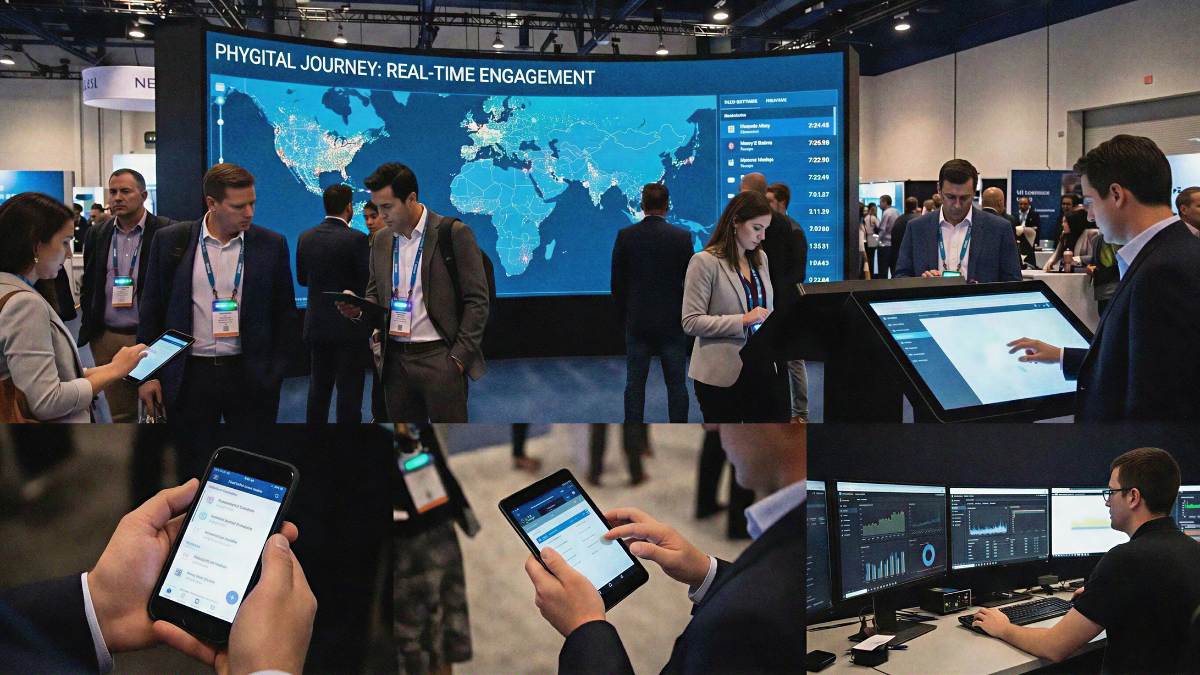
When we design experiences at Halo Tech Media, we look at the “Phygital” journey—the blending of physical and digital worlds. This ensures that the digital layer enhances, rather than distracts from, the physical connection.
The Tech Stack: Powering the New Standard
To execute this vision, brands must leverage a robust stack of technologies. Here is how specific tools are reshaping the landscape.
1. The Central Nervous System: Advanced Event Apps
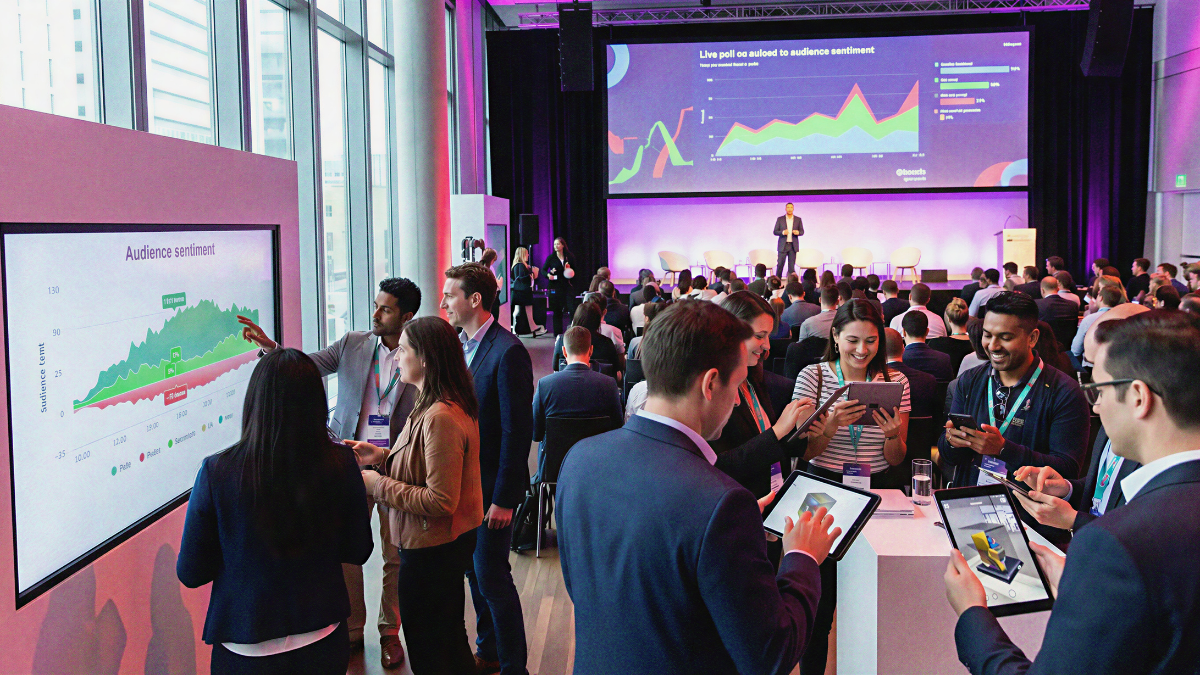
The event app is no longer just a digital agenda. It is the remote control for the entire experience. Leading platforms now integrate AI-driven networking, matching attendees based on professional interests, goals, and historical behavior. Furthermore, these apps facilitate “second screen” engagement. While a speaker presents, the audience can answer live polls, upvote questions, and participate in sentiment analysis. This real-time feedback loop allows speakers to pivot their content instantly to match audience interest, transforming a monologue into a dialogue.
2. AI and Hyper-Personalization
Artificial Intelligence is the engine behind relevance. AI algorithms can analyze attendee registration data to curate personalized schedules, suggest relevant exhibitors, or recommend networking connections. At Halo Tech Media, we apply AI principles not only in event logistics but also in content strategy and media buying. By understanding what content a user engages with prior to the event, we can tailor their on-site experience. For example, facial recognition (used with consent) can trigger personalized welcome messages on digital signage as a VIP enters a room, creating a sense of immediate recognition and belonging.
3. Gamification with Purpose
Gamification often gets a bad reputation because it is frequently implemented poorly—meaningless points for meaningless tasks. However, strategic gamification drives desired behaviors. Digital scavenger hunts using QR codes can guide foot traffic to under-visited areas of an expo floor. Leaderboards for engagement can incentivize participation in workshops. The key is to tie rewards to value.
4. Immersive Realities: AR and Mixed Reality
Virtual Reality (VR) can be isolating, locking a user in a headset. Augmented Reality (AR) and Mixed Reality (MR), conversely, are social. Imagine an automotive launch where attendees use iPads or AR glasses to see the inner mechanics of a car overlaid on the physical model. Or consider a pharmaceutical conference where doctors interact with a 3D holographic molecule. These tools turn abstract concepts into tangible, memorable experiences.
5. Bridging Global Audiences: The XHS Factor
In an increasingly globalized market, interactivity must be culturally relevant. For brands targeting Chinese-speaking demographics—a massive segment in global luxury and tech—standard western platforms often fall short. This is where platforms like Xiaohongshu (Little Red Book or XHS) become critical. Integrating XHS into the event strategy allows for “seeded” content and influencer (KOL) activation that resonates with this specific audience. As an agency with specialized capabilities in XHS marketing, we often set up “Insta-worthy” (or “XHS-worthy”) zones designed specifically for social sharing, bridging the gap between the live event and the digital conversation in China.
The Future is Hybrid and Hyper-Interactive
Tomorrow’s events will no longer distinguish between the online and offline worlds. They will simply be known as experiences. We are moving into an era where events are not just one-time gatherings but continuous communities, with technology serving as the connector that holds everything together.
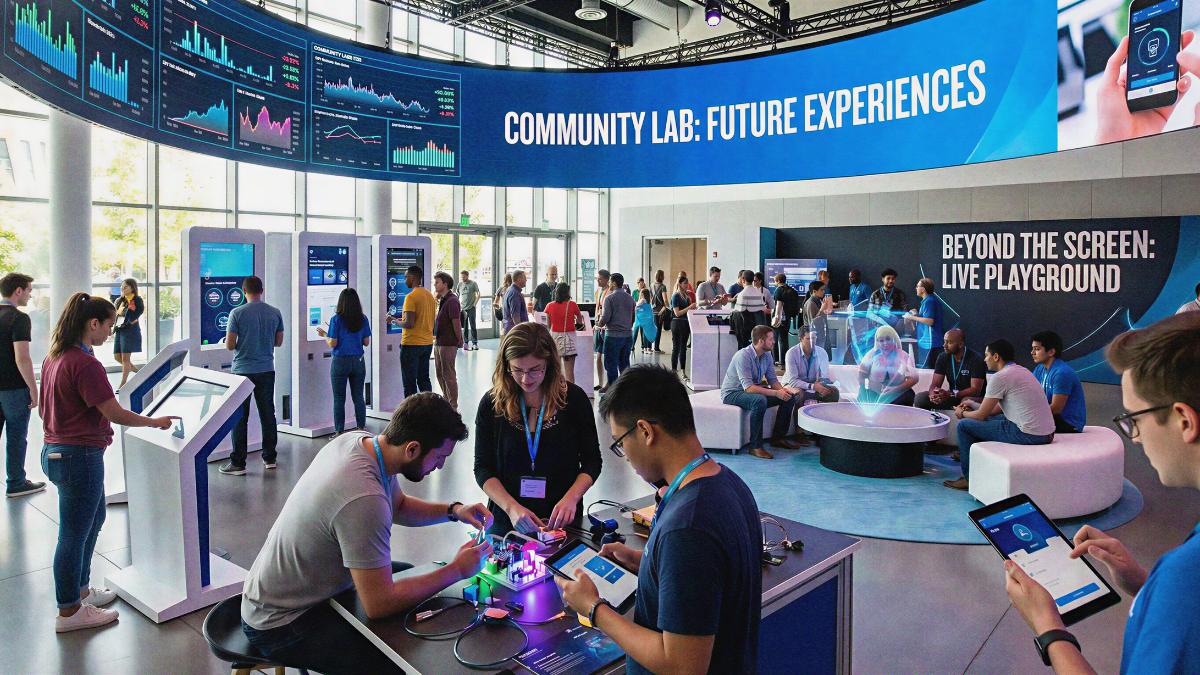
The brands that succeed will be the ones that realize an event is no longer just a lecture hall. It is a playground, a laboratory, and a community hub all rolled into one.
Revolutionizing these traditional formats takes courage. It requires a willingness to experiment and a commitment to prioritizing the attendee’s experience over the organizer’s convenience. While this may seem challenging, the rewards are well worth the effort. You gain deep brand loyalty, actionable data, and genuine human connections.
Is your brand ready to move beyond the passive?
At Halo Tech Media, we specialize in fusing cutting-edge event technology with robust digital marketing strategies. From AI-driven experience design and high-impact content production to specialized Xiaohongshu marketing and global media buying, we provide the holistic support needed to turn your next event into a landmark experience.
Let’s design the future of your brand engagement.
Contact Halo Tech Media today.
References and Sources
 Back
Back