
Why a 60-Second TikTok is Beating Your Best SEO Blog Post
Social search — using TikTok and Instagram to find answers instead of Google — is reshaping how people discover brands. For many queries, a short, authentic 60-second video now outperforms even a well-optimised SEO blog post.
The age of the “ten blue links” is rapidly approaching a turning point. For years, digital discovery began with typing a query into Google’s familiar search box. Today, that habit is quietly fading.
At Halo Tech Media, we are witnessing a fundamental transformation: search behavior is no longer anchored to traditional search engines. Instead, social platforms are emerging as the new front door to the internet—especially for younger audiences. Social search refers to the growing practice of using platforms such as TikTok, Instagram, and YouTube to explore ideas, discover products, learn new skills, and find local recommendations. What began as a secondary behavior has now become a mainstream method of information discovery.
This shift goes far beyond a change in platforms. It reflects a deeper evolution in how people define “useful” information. Users increasingly value content that feels authentic, visual, experience-driven, and socially validated—rather than static lists of links. In this new landscape, discovery is powered less by keywords and more by stories, creators, and communities. Search is becoming immersive, visual, and conversational. For brands and marketers, this signals a new reality: visibility is no longer earned only through rankings, but through relevance inside the social feed.

The Statistical Reality of the Shift
The claim that “Gen Z is abandoning Google” is often brushed off as an exaggeration. However, mounting evidence points to something far more consequential: a lasting structural shift in how younger generations discover information. Even Google’s own internal research signals a turning tide. Nearly 40% of users aged 18–24 now prefer turning to TikTok or Instagram instead of Google Search or Google Maps when deciding where to eat. What was once unthinkable has quietly become routine.
Independent industry data reinforces this transformation. An Adobe study found that 64% of Gen Z consumers have already used TikTok as a search engine. At the same time, DataReportal’s Digital 2025 Global Overview confirms that “finding information” remains the internet’s top use case—yet the paths people take to satisfy that need are multiplying at unprecedented speed. Google still commands roughly 90% of the global search market. But raw market share no longer tells the whole story. The real battleground is shifting to the discovery stage of the customer journey, where inspiration is formed and preferences are shaped.
Here, visual-first and creator-driven platforms are steadily gaining ground. HubSpot’s 2025 social media Trends Report reveals that 84% of marketers now believe consumers are more likely to search for brands on social media than on traditional search engines. The implication is clear: the future of search is no longer confined to a search bar—it lives inside feeds, videos, and communities.
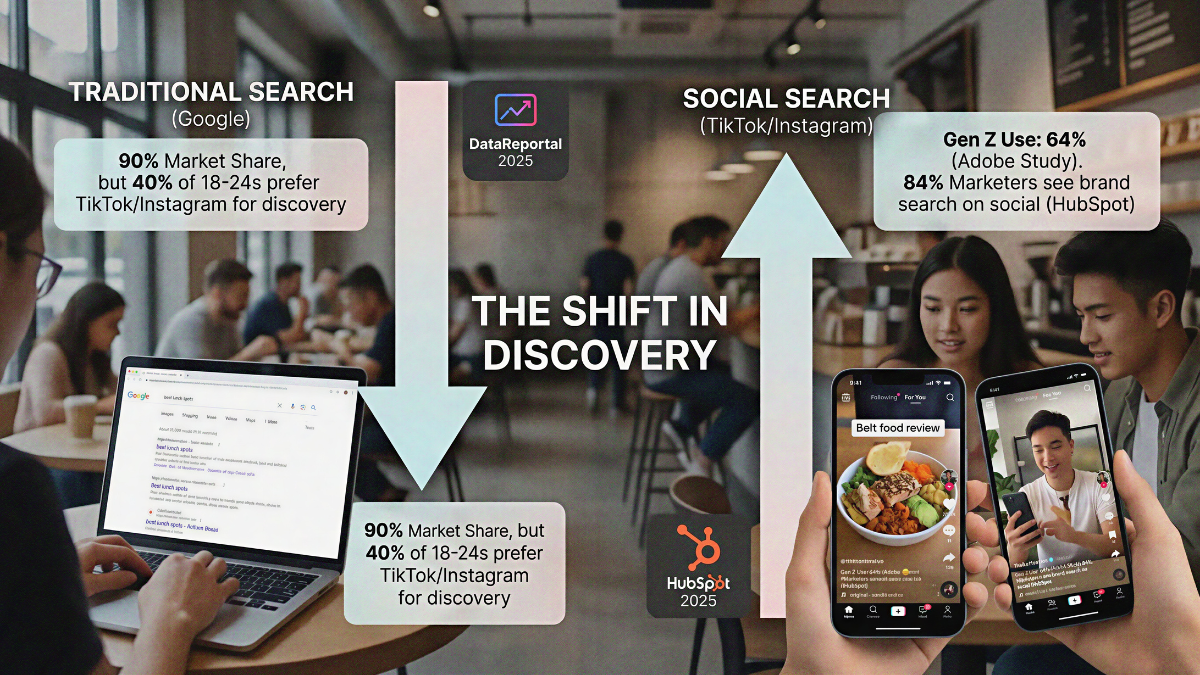
Why Social Search Wins: The Psychological Drivers
Why is a 60-second video on TikTok outperforming a well-optimized blog post? The answer lies in the intersection of psychology, culture, and user experience.
1. The Trust of the “Real” Person
Traditional SEO has, in many ways, become a victim of its own success. Users are increasingly wary of “highly optimized” articles that feel like they were written for an algorithm rather than a human. In contrast, Gen Z prioritizes “social proof” over “solo research.” Seeing a real person physically standing in a restaurant or demonstrating how a skincare product reacts on actual skin provides a level of perceived authenticity that a text-based review cannot match.
2. Contextual Richness and Visual Learning
A search for “best hiking boots” on Google yields a list of specs and affiliate links. The same search on TikTok provides a video of those boots navigating a muddy trail, a discussion on the fit around the ankle, and the sound of the grip on rock. This immersive context reduces the cognitive load required to make a decision.
3. The “Lazy Genius” Efficiency
Despite the stereotype of short attention spans, Gen Z is remarkably efficient at filtering information. They use TikTok as a “shorthand” for the internet. A 15-second “hack” or a “top 5” list provides immediate utility. Consequently, the barrier to entry for information is lower, and the speed to “insight” is faster.
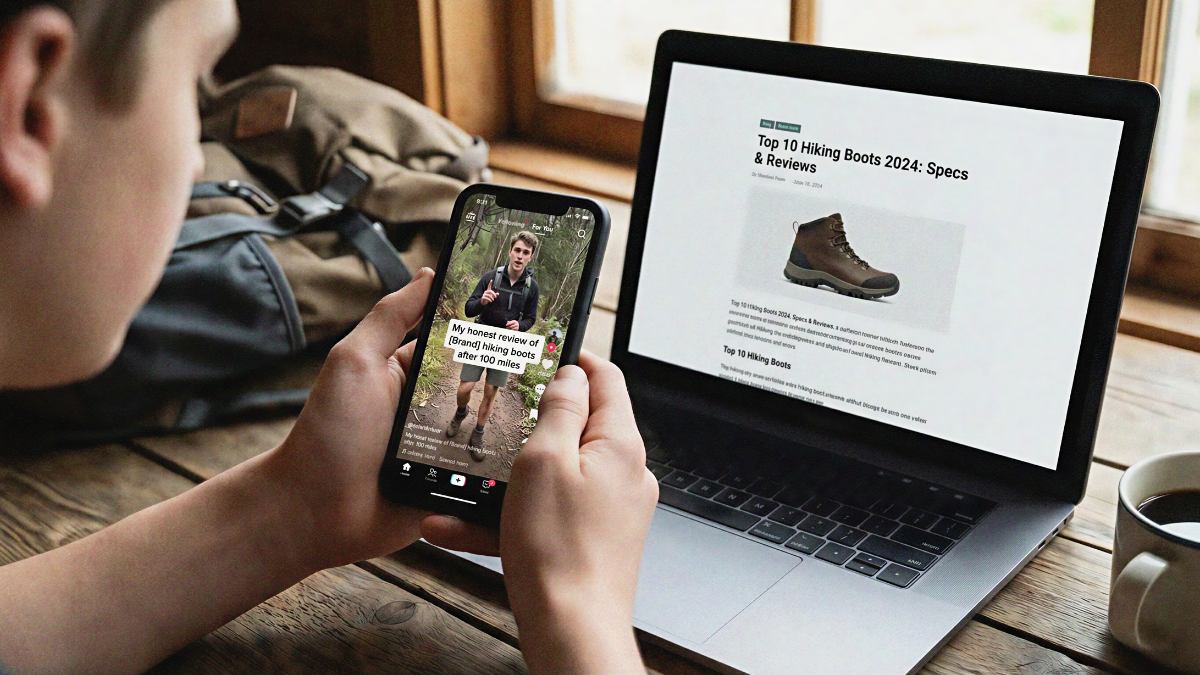
Traditional Search vs. Social-First Discovery
To adapt, marketers must understand the fundamental differences in user intent and platform architecture.
Strategic Implications for Modern Marketers
The rise of social search does not mean SEO is dead; rather, it means SEO is being redefined. At Halo Tech Media, we advocate for an “Ecosystem Approach” where search and social are no longer treated as separate silos.
1. Redefining SEO Strategy
Marketers must now optimize for “Social SEO.” This involves using relevant keywords in TikTok captions, utilizing on-screen text overlays (which are searchable by the algorithm), and ensuring that the first three seconds of a video are designed to answer a specific query. Thus, your keyword research should now include “TikTok Search Insights” alongside Google Keyword Planner.
2. The Creator-Centric Content Strategy
Since Gen Z places greater trust in people than in logos, creator-led content is increasingly outperforming brand-led messaging. Brands must therefore shift from being the sole “source” of information to becoming “facilitators” that empower credible voices.
This shift is supported by insights from McKinsey & Company, a leading global management consulting firm that advises top organizations on strategy and consumer behavior. McKinsey reports that while social commerce is expanding rapidly, trust is moving away from mass influencers toward subject matter experts and niche micro-influencers—creators who offer deeper credibility and more authentic connections within specific communities.
3. Experiential and Event Marketing Integration
For event technology and experiential marketing, social search is a game changer. Attendees are no longer just “experiencing” an event; they are “indexing” it. Creating “searchable moments”—visually striking, highly informative installations that invite users to film and explain—ensures your event lives on as a search result for months to come.
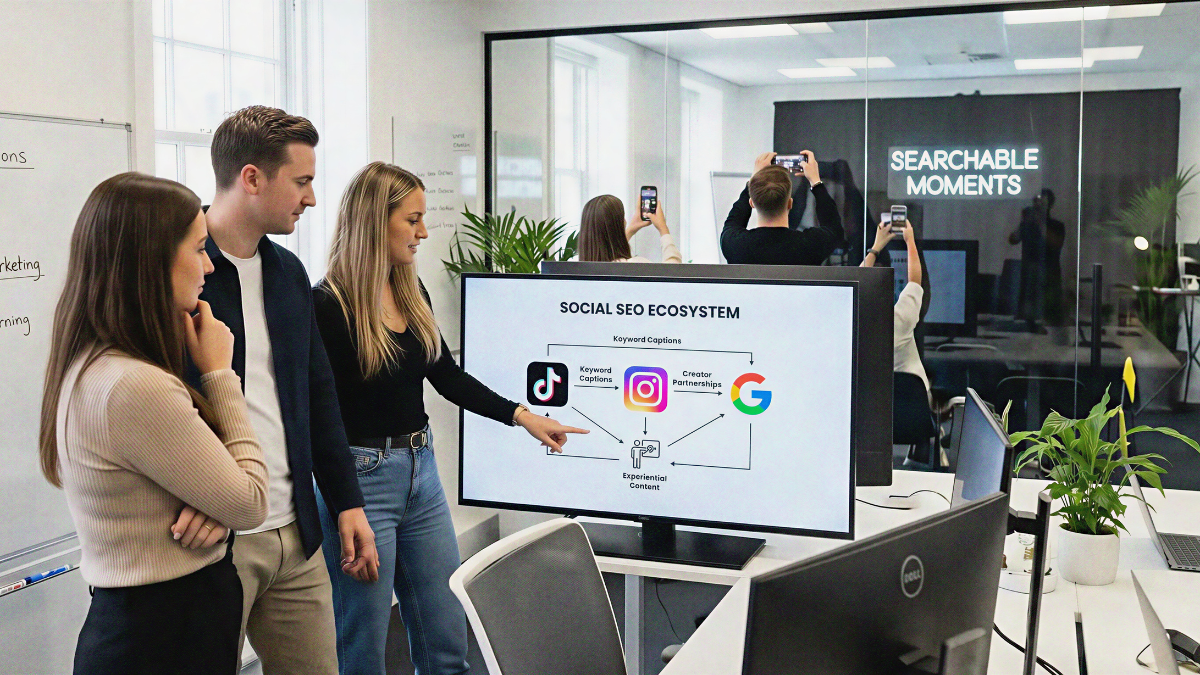
Actionable Framework: The “V.A.S.T.” Model for Social Search
To help our partners navigate this transition, Halo Tech Media utilizes the V.A.S.T. framework for social-first discovery:
- V – Visibility (Social SEO): Use specific, long-tail keywords in your bio, captions, and speech-to-text. The platform’s AI listens to what you say in the video to categorize it.
- A – Authenticity: Prioritize “lo-fi” production values over “glossy” commercials. HubSpot reports that 76% of marketers say authentic, low-production videos outperform highly produced content.
- S – Solutions: Structure content to answer a specific question immediately. “How to fix a leaky faucet” should show the fix in the first five seconds.
- T – Trust (The Comment Section): Engagement is a search signal. Actively managing the comment section provides the “social proof” that validates the search result for the next user.

Risks and Common Pitfalls
Transitioning to a social-first search strategy is not without its hazards. Many brands make the mistake of simply reposting their TV commercials to TikTok, a move that is often met with immediate “scroll-past” behavior. Moreover, the ephemeral nature of social content makes “evergreen” search value harder to maintain compared to a website.
Another significant risk is “Brand Safety.” Unlike the controlled environment of a SERP (Search Engine Results Page), social search results are surrounded by unfiltered user-generated content. Marketers must be diligent in monitoring the “neighborhood” their content lives in.
The Road Ahead: Search in 2029
Over the next three to five years, we anticipate a “Convergence of Search.” Google is already integrating more TikTok and Instagram videos into its search results, and TikTok is expanding its “Search” functionality to include local maps and shopping integrations.
Artificial Intelligence will play a pivotal role in this evolution. We expect to see “Generative Social Search,” where AI summarizes video content into real-time answers for users. Search will become less about “finding a website” and more about “obtaining an answer” through a multi-modal experience of text, voice, and video.
Partner with Halo Tech Media
At Halo Tech Media, we specialize in marketing strategies that don’t just follow trends—they define them.
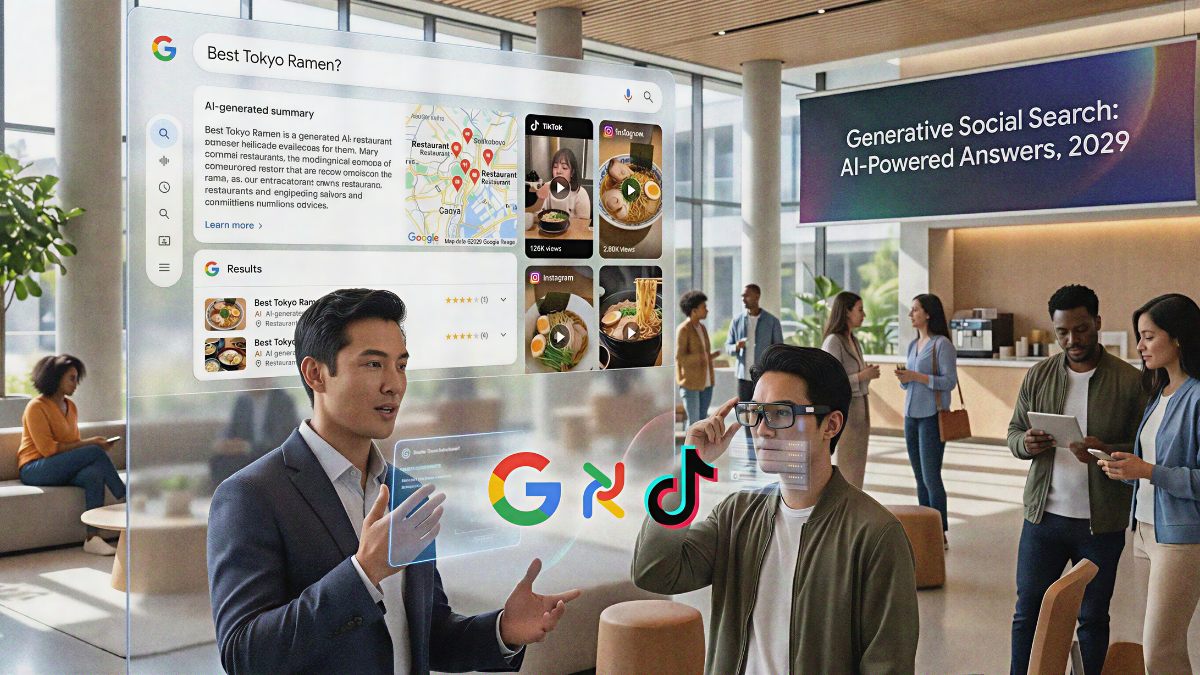
References and Sources
- Almost 40% of Gen Z is using TikTok and Instagram for search instead of Google, according to Google’s own data | Nieman Journalism Lab
- Search trends for 2025
- Digital 2025: Global Overview Report — DataReportal – Global Digital Insights
- Social Search Statistics 2025: 98+ Stats & Insights [Expert Analysis] – Marketing LTBฃ
- 2025 Social Trends Report
Frequently Asked Questions
What is social search?
Social search is using social platforms like TikTok and Instagram as discovery engines — searching for recommendations, reviews and how-tos there instead of, or alongside, Google.
Why is TikTok beating Google for discovery?
Younger users prefer authentic, fast video answers over reading articles. TikTok delivers relatable, visual, creator-led results that feel more trustworthy and engaging for many queries.
Should brands shift from SEO to social search?
Not shift — expand. SEO still captures high-intent search, but brands should also optimise for social search with short-form video, so they appear wherever audiences look for answers.
 Back
Back